

تدوین از :
کسب و کارخانوادگی، شرکت یا مجموعهای از فعالیتها میباشد که متعلق به اعضای یک خانواده است و توسط دو یا چند عضو خانواده اداره میشود که برای راهبری و رشد کسب و کار با هم کار میکنند.
سوپر مارکت های محلی، رستورانها، شرکتهای ساختمانی، کشاورزی، تولیدی، بازرگانی و خرده فروشیها (فروشگاههای بزرگ و مالها) که متعلق به اعضای خانوادهها میباشند همه نمونههایی از کسب و کارهای خانوادگی هستند. این اعضا مسئولیت انجام عملیات جاری، حسابداری، خدمات مشتریان و یا راهبری کسب و کار را به عهده دارند. اغلب، این سازمانهای خانوادگی پویایی منحصر به فرد دارند زیرا روابط شخصی را با روابط حرفهای ترکیب میکنند و در نتیجه مزایا و چالشهای یکتایی خلق میکنند.
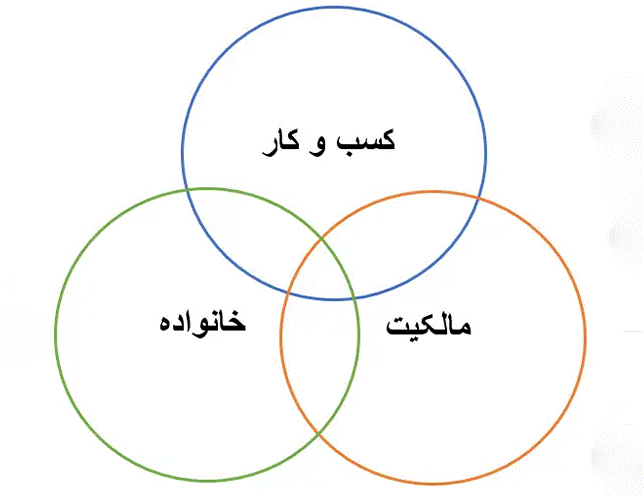
این اقتضای انحصاری، برآیند تعاملات و دخالتهای خانواده در کسب و کار از طریق مدیریت، کنترل، حاکمیت و مالکیت آنها میباشد. آموزههای کلاسیک یادآور این نکته است که شناخت و درک مباحث اساسی کسب و کارهای خانوادگی از جمله انتقال بیننسلی، تداوم کسب و کار، توالی و جانشینی و چرخه عمر کسب و کار به کمک پیوند میان حوزههای سه گانه که در ذیل نشان داده شده است امکان پذیر میباشد. این حوزهها به صورت مدور بازخوردی عمل مینمایند و بر یکدیگر تاثیر میگذارند.
هر کدام از این حوزهها، ساختار و ویژگیهای خاص خود را دارند، مثلآ حوزه خانواده از چهار مرحله تشکیل میشود؛
حوزه مالکیت نیز دارای سه مرحله شامل:
میباشد.
همچنین حوزه کسب و کار از سه مرحله:
تشکیل میگردد. طبعا رسیدگی به همه این ابعاد، مباحث خود را میطلبد که در این مقال نمیگنجد.
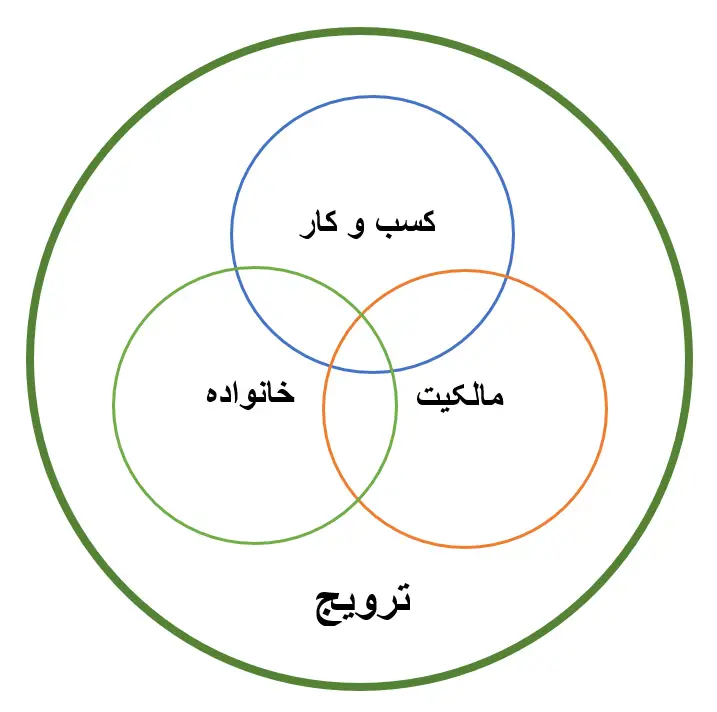
ما در انجمن ترویج کسب و کارهای خانوادگی، بنا به دلیل وجودی و ماموریت آن ناگزیر به استفاده از حوزه چهارمی هستیم که آن را حوزه “ترویج“ کسب و کارهای خانوادگی نامگذاری نمودهایم. در واقع بُعد ترویج نه تنها به کل ابعاد سه گانه پیشگفته محاط خواهد بود، بلکه توجه آن به کل زنجیره ارزش و اکوسیستم کسب و کارهای خانوادگی معطوف است. چیزی که تاکنون در کشورمان بدان بی توجهی مشهود شده است. به همین روی، جامعه کسب و کارهای خانوادگی؛ این استعداد عظیم و تاثیرگذار، کمتر از مزایای داشتن منابع مشاوره و پشتیبانیهای حرفهای، حفاظت و حمایت قانونی بهرهمند شده و بیشتر دچار چالشهای اساسی بوده است.
بنابراین جا دارد به نحوی شایسته مورد عنایت همه دستاندرکاران قانونگذاری، دولت و به ویژه نقش آفرینان بخش خصوصی واقع گردد.
تکلیف کاملا شفاف و روشن است، شایسته است با مطالعه و تدبیر لازم و کافی برای گسترش زمینه حمایت و رشد کسب و کارهای خانوادگی و رونق صنایع تولیدی و خدماتی پشتیبان مرتبط فرهنگسازی شود. مسلمآ این خیل انبوه فعالان به دلایل برجسته اقتصادی، اجتماعی، فرهنگی و زیست محیطی اهمیتی ویژه دارند.
بدین لحاظ حمایت از کسب و کارهای خانوادگی به معنای حفظ تنوع فرهنگی و تاریخی در چشمانداز جامعه کسب و کارهای خانوادگی است. آنها برای اعضای خانواده فرصتهایی فراهم میآورند تا با هم کار کنند، روابط بین خود را تقویت نمایند، دانش و تخصص خود را از نسلی به نسل دیگر انتقال دهند. این حس تداوم و میراث نه تنها برای خانواده، بلکه برای جامعه گستردهتر ارزشمند است. عموما حمایت از کسب و کارهای خانوادگی به رونق اقتصادهای محلی، حفظ سنتها، تنوع و تقویت پیوندهای قوی اجتماعی کمک میکند.
در پرتو چنین اهمیتی، ضرورت دارد فرهنگ مراقبت از کسب و کارهای خانوادگی هرچه فراگیرتر در سطح ملی مورد توجه قرار گیرد و به طور شایسته ترویج شود. این کار مستلزم حفظ اصالت، شفافیت و حرفهای بودن در تمام تلاشها میباشد که نیازمند برنامهریزی و اجرای دقیق است. بدین ترتیب ضرورت دارد حامیان ذاتی کسب و کارهای خانوادگی به ویژه اتاقهای بازرگانی و انجمنهای تخصصی ذیربط با انجام ابتکاراتی سازنده، این پدیده نیکوی اقتصادی، اجتماعی و فرهنگی را تقویت نمایند.
ما برای ایجاد یک محیط تجاری پویا و پایدار و تقویت توسعه جامعه و حفظ و اعتلای سنتها و ارزشهای ناب خانوادگی ناگزیر به داشتن چارچوبهای موثر برای فعالیتهای ترویجی کسب و کارهای خانوادگی در سطح ملی هستیم که به شرح ذیل نمونهای از آن پیشنهاد میگردد:
کمپینهای آموزشی برای افزایش آگاهی در مورد اهمیت و مزایای حمایت از کسب و کارهای خانوادگی انجام گیرد. از کانالهای رسانهای مختلف مانند رسانههای اجتماعی دیجیتال، تلویزیون، رادیو، مطبوعات و … برای دستیابی به مخاطبان گسترده در سطح کشور استفاده شود.
برنامههای کارآفرینی را که به طور خاص برای کسب و کار خانوادگی طراحی میشوند، سازماندهی و حمایت شود. این برنامهها میتوانند راهنمایی، آموزش و منابعی را برای کمک به رشد و شکوفایی کسب و کارهای خانوادگی فراهم کنند.
رویدادهای شبکهای سازماندهی شوند که در آنها صاحبان کسب و کارهای خانوادگی بتوانند با یکدیگر ارتباط برقرار کنند، تجربیات خود را به اشتراک بگذارند و از نقش آفرینانان صنعت بیاموزند. آنان میتوانند همکاری و اشتراک دانش را در بین کسب و کارهای خانوادگی تقویت کنند.
از خطمشیهایی حمایت شود که از منافع کسب و کارهای خانوادگی محافظت میکنند. با سیاستگذاران برای تأثیرگذاری بر قوانین و مقرراتی که محیط کسب و کار مطلوبی را برای شرکتهای خانوادگی ایجاد میکند، ارتباطات موثر برقرار شود.
برای جمعآوری دادهها در مورد چالشها و فرصتهای پیش روی، تحقیق انجام شود. از این اطلاعات میتوان برای تنظیم ابتکارات در مسیر پیشرفت، راهحلهای مناسب اتخاد نمود.
ارائه برنامههای یادگیری و کارگاههای آموزشی با تمرکز بر بهبود مهارتهای مدیریت و حاکمیت مالکان. این ابتکار میتواند شامل زمینههایی مانند برنامهریزی جانشین پروری، مدیریت مالی،توسعه رهبری و … باشد. اجرای این ابتکارات و فراتر از آنها، با همکاری موثر سازمانهایی مانند اصناف، اتحادیهها و انجمنهای تجاری مرتبط، دانشگاهها و مراکز آموزشی و پژوهشی، سازمانهای دولتی و قانونگذاری و کسب و کارهای خانوادگی حامی، عملی میشود.
با مشارکت نمایندگان داوطلب سازمانهای مذکور میتوان تیم اختصاصی کارآمدی را شکل داد و به پشتوانه آن، اهداف، طرح ریزی ابتکارات و معیارهای اندازهگیری پیامدهای آنها و انجام هرگونه تنظیمات لازم در این مسیر را تعیین و به اجرا گذاشت.
نتیجه آنکه، کسب و کارهای خانوادگی نقشی مفیدی در توسعه جامعه دارند. تأثیرات در خور توجه اقتصادی، پیوند قوی با اجتماع و حمایت از فعالیتهای بشردوستانه، داشتن دیدگاه و چشمانداز بلندمدت، انتقال بین نسلی و تمرکز در تداوم و پایداری میراث خانوادگی همه از معیارهای نیکوی پیشرفت هستند.
سازگاری با شرایط متغیر بازار، داشتن مجموعهای از ارزشها و اصولی که در عملیات کسب و کارهای خانوادگی عمیقاً ریشه دوانیده، همه تعهدات حرفهای و اخلاقی آنها را نمایان میسازد. کسب و کارهای خانوادگی سالها دانش و تجربه صنعت را جمعآوری میکنند که به آنها اجازه میدهد در حوزه کاری برتر باشند و نوآوری و تخصص در صنعت را پرورش دهند.
آنها اغلب با مشتریان روابط نزدیک دارند و نیازها و ترجیحات آنها را اولویتبندی میکنند و با ارائه خدمات دقیق منجر به رضایت و وفاداری آنها میشوند. این دلایل محکم و تلاشهای تاثیرگذار، مشوقی قدرتمند برای اجرای برنامههای ترویج توسعه کسب و کارهای خانوادگی در کشور است.

Edited by:
A family business is a company or a set of activities that is owned by the members of a family and is managed by two or more family members who work together to manage and grow the business.
Local supermarkets, restaurants, construction companies, agriculture, production, commerce and retail (department stores and malls) which are owned by family members are all examples of family businesses. These members are responsible for current operations, accounting, customer service or business management. Often, these family organizations have a unique dynamic because they combine personal relationships with professional relationships, creating unique advantages and challenges..
This exclusive requirement is the result of family interactions and interventions in business through their management, control, governance and ownership. Classical teachings remind us that knowing and understanding the basic issues of family businesses, including intergenerational transfer, business continuity, succession and succession, and the life cycle of the business, with the help of the link between the three areas that It is possible as shown below. These spheres act in a feedback loop and influence each other.
Each of these areas has its own structure and characteristics, for example, the family area consists of four stages;
The domain of ownership also has three stages including:
is
Also, the business field has three stages:
is formed Of course, dealing with all these dimensions requires its own discussion, which is not included in this article.
In the family business promotion association, due to its existence and mission, we are forced to use the fourth field, which we have named the field of ” promotion” of family businesses. In fact, the dimension of promotion will not only be surrounded by the aforementioned three dimensions, but its attention is directed to the entire value chain and ecosystem of family businesses. Something that has been neglected in our country so far. Similarly, the family business community; This huge and influential talent has benefited less from the advantages of having professional support and consulting resources, protection and legal support and has faced more fundamental challenges.
Therefore, there is a place for it to be properly cared for by all those involved in the legislation, the government, and especially the actors of the private sector.
The task is completely transparent and clear, it should be cultured with the necessary and sufficient study and planning to expand the support and growth of family businesses and the prosperity of related production and service industries. Undoubtedly, this large number of activists are of special importance for outstanding economic, social, cultural and environmental reasons.
In this sense, supporting family businesses means preserving cultural and historical diversity in the perspective of the family business community. They provide opportunities for family members to work together, strengthen their relationships, and transfer their knowledge and expertise from one generation to another. This sense of continuity and heritage is valuable not only to the family, but also to the wider community. In general, supporting family businesses contributes to the prosperity of local economies, preserving traditions, diversity and strengthening strong social bonds.
In the light of such importance, it is necessary to take care of the culture of family businesses more comprehensively at the national level and promote them appropriately. This work requires maintaining authenticity, transparency and professionalism in all efforts, which requires careful planning and execution. In this order, there is a need for the inherent supporters of family businesses, especially the rooms Commerce and related specialized associations should strengthen this good economic, social and cultural phenomenon by taking constructive initiatives.
In order to create a dynamic and stable business environment and to strengthen the development of the society and to preserve and elevate pure family traditions and values, we are forced to have effective frameworks for the promotion activities of family businesses at the national level. An example of it is suggested as follows:
Educational campaigns should be conducted to raise awareness about the importance and benefits of supporting family businesses. Different media channels such as digital social media, television, radio, press, etc. should be used to reach a wide audience in the country..
Organize and support entrepreneurship programs specifically designed for family businesses. These programs can provide guidance, training, and resources to help family businesses grow and thrive..
Organize networking events where family business owners can meet with aNetwork, share experiences, and learn from industry leaders. they They can strengthen cooperation and knowledge sharing among family businesses.
Support policies that protect the interests of family businesses. Communicate effectively with policymakers to influence laws and regulations that create a favorable business environment for family businesses..
Conduct research to collect data on challenges and opportunities ahead. From this information, appropriate solutions can be taken to set initiatives in the path of progress..
Providing learning programs and workshops focusing on improving the management and governance skills of owners. This initiative can include areas such as succession planning, financial management, leadership development, etc.. Implementation of these initiatives and beyond, with the effective cooperation of organizations such as guilds, unions and related trade associations, universities and educational and research centers, governmental and legislative organizations, and businesses. A supportive family is practical.
With the participation of volunteer representatives of the mentioned organizations, an efficient dedicated team can be formed and based on it, goals, planning initiatives and criteria for measuring their consequences and making any necessary adjustments in this direction can be determined and implemented.
As a result, gain And family work has a useful role in the development of society. Impacts worthy of economic attention, strong connection with the community and support for humanitarian activities, having a long-term vision and vision, intergenerational transfer and focusing on the continuity and sustainability of family heritage are all good criteria of progress.
Adapting to the changing conditions of the market, having a set of values and principles that are deeply rooted in the operation of family businesses, shows all their professional and ethical commitments. Family businesses accumulate years of industry knowledge and experience that allow them to excel in their field and foster innovation and industry expertise..
They often have close relationships with customers and prioritize their needs and preferences and lead to their satisfaction and loyalty by providing detailed services. These strong reasons and effective efforts are a powerful incentive to implement programs to promote the development of family businesses in the country.